100 Questions in Your Baby's First Year – The Most Important Answers for Parents of 0 to 12 Month Olds
100 Questions in the First Year of Baby's Life: The First 3 Months
The first three months with a baby are a special, intense, and often uncertain time. Many parents wonder daily: Is this normal? Is my baby drinking enough? Why is their sleep so restless? Why do they always want to be held? Especially at the beginning, a baby develops rapidly – physically, emotionally, and neurologically. At the same time, they primarily need closeness, nourishment, sleep, protection, and reliable caregivers.
The following questions and answers provide guidance for the first few weeks after birth. They do not replace medical advice but help to better classify typical situations and understand what babies truly need in their first three months of life.
1. What does a baby truly need in the first three months?
In the first three months, a baby primarily needs closeness, nourishment, sleep, warmth, security, and loving responses to their needs. Many parents initially think they need to stimulate their baby, keep them busy, or get them used to fixed routines. In fact, the most important "stimulation" at this stage is a reliable bond: the baby experiences that someone comes when they cry, that they are held when they need closeness, and that their signals are taken seriously.
A newborn cannot yet regulate themselves. They understand neither day and night nor waiting times or fixed routines. Hunger, fatigue, stomach ache, cold, overstimulation, or the need for physical contact feel immediate and urgent to a baby. Therefore, it is completely normal if parents feel needed almost around the clock in the first few weeks.
Important: You cannot "spoil" a baby with closeness in the first few months. Carrying, cuddling, breastfeeding or feeding on demand, skin-to-skin contact, and soothing voices give the baby security. This is exactly how trust develops step by step – in the parents, in the world, and later also in themselves.
Practically, this means: ensure calm transitions, keep your baby warm, react to hunger and fatigue signs, avoid too many stimuli, and give yourself time. The first three months are not a phase where everything has to run perfectly. It is a getting-to-know-you period.
2. How often should a newborn drink?
Many newborns drink very frequently in the first few weeks. For breastfed babies, eight to twelve feeding sessions within 24 hours can be completely normal, sometimes even more. Bottle-fed babies also need regular meals initially, although the amount and interval can vary depending on the baby, weight, and the recommendations of the midwife or pediatrician.
What is important is less a rigid schedule than whether your baby is thriving overall. Good signs are regular wet diapers, an alert impression during active phases, a healthy skin color, and appropriate weight development. Especially in the first few days after birth, weight is closely monitored because babies initially lose some weight and should then regain it.
Breastfed babies often drink not only out of hunger. Breastfeeding also means closeness, comfort, regulation, and physical contact. This is normal and not a sign that there is "not enough milk." At the same time, if your baby is very sleepy, hardly drinks, has significantly fewer wet diapers, appears lethargic, or is not gaining weight, this should be medically evaluated.
A common mistake is trying to artificially extend drinking intervals too early. In the first few months, the stomach is still small, growth is high, and needs are individual. Feeding on demand is therefore usually more sensible than a strict rhythm.
3. How do I know if my baby is getting enough milk?
Whether a baby is getting enough milk is not only determined by how long they drink at the breast or how much disappears from the bottle. Several indicators together are crucial: wet diapers, bowel movements, weight development, skin color, awake phases, and the baby's general behavior.
A well-fed baby appears relaxed or sleepy after many meals, has regularly wet diapers, and gains weight over time. For breastfed babies, drinking duration can vary greatly. Some babies drink very effectively and are satisfied after a short time, others need longer or drink in clusters – i.e., several times in short intervals.
Especially in the evening, cluster feeding is common. The baby then seemingly wants to be at the breast constantly or fed frequently. This can be exhausting, but in many cases, it is normal. It helps the baby calm down and can support milk production in breastfeeding mothers.
You should become attentive if your baby drinks very weakly, falls asleep quickly while drinking and is difficult to wake, has significantly fewer wet diapers, shows a sunken fontanel, appears very yellow, or is unusually limp. In that case, it is better to contact a midwife, pediatrician, or emergency medical service.
4. Why is my baby's sleep so restless?
Restless baby sleep is very common in the first three months. Newborns sleep differently than adults. Their sleep cycles are shorter, they switch more frequently between light and deep sleep, and they often move during it. Many babies twitch, make noises, grimace, kick, or briefly appear awake, although they are still sleeping.
Furthermore, a newborn does not yet reliably know the day-night rhythm. They first have to learn that it is brighter, louder, and more active during the day and quieter at night. This rhythm develops gradually. Therefore, short sleep phases, frequent waking, and irregular nights are normal in the first few weeks.
Parents often interpret restless sleep noises as hunger or being awake. Sometimes it is worth observing for a short moment whether the baby is really waking up or just active in their sleep. However, if they are clearly crying, searching, smacking, or becoming restless, they naturally need support.
Helpful tips include quiet evening routines, dimmed lights at night, little interaction during nighttime diaper changes and feedings, and a safe sleeping place. Important: Babies should sleep on their backs, in a safe sleeping environment without loose pillows, blankets, or stuffed animals in the crib.
5. How much sleep is normal in the first three months?
The amount of sleep can vary greatly in the first three months. Some babies sleep a lot in total, others seem more alert from the start. What is crucial is not whether your baby reaches a specific number of hours, but whether they generally appear healthy, drink, gain weight, and show age-appropriate behavior during awake phases.
Many newborns sleep in several segments throughout the day. Longer sleep phases of several hours can occur, but are not the rule for all babies. Frequent short naps are normal, especially at the beginning. It is also not unusual for babies to sleep better in arms during the day or to calm down when being carried.
Sleep at this age can only be trained to a limited extent. A baby does not sleep "badly" because parents do something wrong, but because their nervous system is still immature. They need help to fall asleep and to feel secure again after waking up.
What parents can do to support: allow daylight and normal everyday noises during the day, offer peace and darkness at night, pay attention to signs of fatigue, and avoid overstimulation. Signs of fatigue can include yawning, looking away, whining, glazed eyes, frantic movements, or restlessness.
6. Should my baby already have a fixed routine?
In the first three months, many babies do not yet have a fixed routine – and that is normal. A newborn lives not by the clock, but by needs. Hunger, sleep, closeness, and digestion often alternate irregularly. Some days seem calm, others chaotic. This does not automatically mean that something is wrong.
100 questions in the first year of baby's life: 3 to 6 months
Between three and six months of age, your baby often changes faster than in any other phase of the first six months. Many children become much more alert, observe their surroundings attentively, discover their hands, laugh more frequently, and begin to interact purposefully with their environment. At the same time, new questions arise: Why isn't my baby turning over yet? When will it purposefully grasp toys? Why is it suddenly sleeping worse? The following answers will help you better understand development during this exciting phase.
26. What can a three-month-old baby usually do?
At around three months, many babies become significantly more attentive. They follow faces and objects with their eyes, react to voices, smile consciously, and begin to actively perceive their environment. Many babies can already lift their heads for short periods when on their tummy and hold it increasingly steadily.
Nevertheless, children develop very differently. Some babies are motorically active earlier, while others initially focus more on social or linguistic skills. Development does not proceed like a checklist, but individually.
Much more important than individual milestones is continuous development. If your baby shows interest in its surroundings, makes contact, and gradually learns new skills, this is usually a good sign.
27. When does my baby start to grasp purposefully?
In the first months of life, babies often accidentally bat at toys or their own hands. From about the third to fourth month, many children begin to reach for objects more purposefully. The brain is now learning to connect sight and movement.
Rattles, teething rings, or soft fabric toys become particularly interesting now. Your baby is slowly discovering that they can hold and move objects. This ability is an important developmental step for later fine motor skills.
At first, grasping still seems clumsy. Many attempts go awry. It is precisely these repetitions that help the brain to control movements with increasing precision.
28. Why is my baby suddenly putting everything in their mouth?
The mouth is one of the most important sensory organs for babies. While adults primarily observe objects with their eyes, babies also explore their world with their lips, tongue, and mouth.
Between the third and sixth month, this so-called oral phase becomes particularly intense. Objects are not only looked at or touched but thoroughly "examined." This helps the brain collect information about shape, surface, temperature, and texture.
This behavior is completely normal and not a sign of hunger. The only important thing is to ensure that the objects are clean, safe, and age-appropriate.
29. When does a baby roll from their back to their tummy?
Many parents eagerly await the first roll. Most babies begin to roll from their back to their side or tummy between the fourth and sixth month. Some children achieve this earlier, others later.
Rolling requires various skills to come together: muscle strength, balance, body control, and coordination. That's why this developmental step is more complex than it initially appears.
Tummy time during waking hours can help build the necessary muscles. It's important that the baby is always supervised and experiences tummy time playfully.
30. Why doesn't my baby like tummy time?
Many babies initially protest loudly against tummy time. This doesn't automatically mean it's harmful to them. Rather, the position is strenuous. The baby has to work against gravity and use muscles that are not yet sufficiently trained.
Short, regular sessions are often more effective than long training periods. Even a few minutes several times a day can have a positive effect. Tummy time should ideally take place during relaxed waking hours.
If parents lie down at eye level with the baby, talk to them, or offer toys, the exercise often becomes much more interesting.
31. Why is my baby laughing more often now?
Between the third and fifth month, social interaction develops rapidly. Babies recognize familiar faces better and better, react to voices, and begin to express joy consciously.
Laughter is not just cute, but an important developmental step. It shows that the baby understands social signals and associates positive experiences with their caregivers.
Many parents experience real "conversations" with their baby for the first time during this period. The child gurgles, laughs, or responds with sounds when spoken to.
32. When does my baby start babbling?
Language development begins long before the first words are spoken. Between the third and sixth month, many babies increasingly produce sounds like "ah," "eh," "goo," or similar noises.
This babbling trains the lips, tongue, larynx, and breathing. At the same time, the brain learns to process language and produce sounds itself.
The more parents talk, sing, or read to their baby, the more language stimuli the child receives. This is not about achievement, but about natural communication in everyday life.
33. Why is my baby suddenly observing everything so attentively?
With each month, vision improves. Colors are recognized more clearly, distances are estimated better, and movements are tracked more precisely.
As a result, the environment suddenly seems much more exciting. Many babies now attentively observe people, pets, light sources, or movements in the room.
This intense observation phase is an important part of cognitive development. The brain collects information and constantly builds new connections.
34. Why is my baby suddenly sleeping worse than before?
Many parents experience a phase around the fourth month where their baby wakes up more frequently or sleeps more restlessly. This is often referred to as a sleep regression.
In fact, sleep structure changes during this time. Sleep becomes more complex and increasingly resembles that of adults. As a result, transitions between sleep phases are perceived more consciously.
Additionally, developmental leaps, new abilities, and increased perception mean that the brain processes more at night.
Even though this phase can be exhausting, it is usually a sign of development and not an indication that something is wrong.
35. When does my baby recognize mom and dad?
Babies recognize familiar voices and smells shortly after birth. With increasing development, they can also distinguish faces better and better.
Between the third and sixth month, many babies clearly show that they prefer certain people. They smile more often, react to voices, or become calmer when familiar caregivers are nearby.
This bond is not created by single special moments, but by thousands of everyday interactions: feeding, comforting, changing diapers, playing, and cuddling.
36. Should I start stimulating my baby now?
Many parents worry about missing something. In fact, a healthy developing baby at this age usually doesn't need special developmental programs.
The best stimulation continues to be closeness, conversations, movement, play, and shared experiences. Babies primarily learn through relationships and daily life.
Reading aloud, singing, laughing together, walks, and opportunities for free movement already offer numerous learning stimuli. Overstimulation from too many activities is often less helpful than a relaxed environment.
37. Why is my baby chewing on their hands?
Many babies discover their hands during this phase and repeatedly bring them to their mouth. This is a normal developmental step.
Additionally, the first tooth movements in the jaw can begin long before a tooth actually becomes visible. Chewing on hands therefore doesn't automatically mean that teeth will erupt immediately.
Often, it's simply curiosity. Hands are always available and are thoroughly explored.
38. How much should my baby play now?
Babies don't need hours of scheduled activities. Even a few minutes of focused observation, grasping, or interaction are stimulating and educational for the brain.
Many parents underestimate how intense even simple experiences are. Observing a face, shaking a rattle, or tracking light reflections already trains numerous skills.
More important than the quantity of play is the quality of shared time.
39. What is a developmental leap?
Many parents report that their baby suddenly becomes clingier, sleeps worse, cries more often, or seems unhappy for no apparent reason. Often, this is not a problem, but a developmental step. The brain develops rapidly in the first year of life and is constantly processing new skills.
During such phases, your baby suddenly perceives their environment differently. They discover new movements, sounds, faces, or connections. These changes can be exciting, but also exhausting. That's why many babies seek extra closeness during these times.
Developmental leaps do not occur uniformly in every child. Some babies show clear changes, others hardly any. It's important to understand that development rarely proceeds linearly. Often, a challenging phase is followed by significant progress.
40. Why does my baby suddenly want to be carried constantly?
Many parents find that their baby suddenly demands significantly more closeness again, even though they previously seemed more independent. This is often related to developmental steps.
When the brain processes new skills, babies often seek security with familiar caregivers. Closeness helps regulate stress and process new impressions. This behavior is therefore usually not a regression, but a sign of development.
Especially between the fourth and sixth month, babies become more and more attentive. The world becomes more exciting, but at the same time more overwhelming. Physical contact helps them cope with these many impressions.
41. When does teething begin?
Many parents expect the first tooth early. In fact, the timing varies greatly. For some babies, the first tooth appears as early as four months, for others much later.
However, processes in the jaw often begin long before the visible tooth eruption. That's why many babies chew on their hands, drool more, or appear restless at times.
Important: Not all drooling automatically means teething. Saliva production generally increases at this age as oral motor skills develop further.
The first tooth is not a competition. A late tooth eruption is usually just as normal as an early one.
42. How do I know if my baby is teething?
Typical signs can include increased drooling, a desire to chew, reddened gums, slight restlessness, or frequent chewing on fingers and objects.
However, many parents attribute almost every change to teething. In fact, similar symptoms can also be caused by developmental leaps, fatigue, or other changes.
High fever, diarrhea, or severe illness symptoms should not automatically be attributed to teething. In such cases, medical clarification is advisable.
Teething rings, physical closeness, and patience help many babies through this phase.
43. Why is my baby suddenly drooling so much?
Between the fourth and sixth month, saliva production significantly increases. At the same time, babies only gradually learn to swallow saliva consciously. This often makes it seem as if the baby is suddenly constantly drooling.
This behavior is usually completely normal and part of the development of oral motor skills. It doesn't necessarily mean that teeth are coming.
Many babies now produce significantly more saliva than just a few weeks prior. Bibs and regular wiping can help prevent skin irritation.
Again, as long as your baby otherwise seems healthy, it is usually a normal developmental step.
44. When will my baby finally sleep through the night?
Hardly any question occupies parents more frequently. The honest answer is: there is no fixed time. Every baby develops its sleep rhythm individually.
Some children sleep for longer stretches early on, while others still need many months of nighttime support. Sleep is not a competition and not a sign of good or bad parenting.
Even babies who temporarily have longer sleep phases can wake up more frequently again due to developmental leaps, illness, teething, or growth.
What matters is not the number of nighttime interruptions, but the long-term development and well-being of both child and parents.
45. Why is my baby suddenly waking up more frequently at night?
When a baby learns new skills, the brain also processes these at night. This can make sleep phases more restless. Many babies even practice new movements in their sleep.
Additionally, perception, memory, and social bonding increase significantly. This leads to babies reacting more consciously to changes at night.
Therefore, more frequent waking does not automatically mean that something is wrong. Rather, it often shows that the child is developing.
Patience, closeness, and as little pressure as possible usually help more than complicated sleep programs.
46. Should my baby already have a fixed daily routine now?
Between the third and sixth month, many babies begin to become somewhat more predictable. Nevertheless, most children still need flexibility.
A general daily rhythm can be helpful. Recurring routines provide orientation and security. These include, for example, similar bedtime rituals or regular mealtimes.
However, a rigid schedule is often not necessary. Babies develop differently, and their needs can vary from day to day.
A good rhythm supports the child without putting them under pressure.
47. When does my baby recognize their own name?
Many babies increasingly react to their name between the fifth and seventh month. They turn their head, look up, or show attention when addressed.
This doesn't necessarily mean they fully understand the meaning of the name. Rather, they recognize a familiar sound pattern that is often associated with positive experiences.
The more often parents lovingly use the name in everyday life, the easier it is for the baby to make this connection.
Language development begins long before the first words.
48. Why does my baby constantly look at my lips?
Babies learn language not only by listening but also by observing. They follow mouth movements, facial expressions, and the movements of the lips very attentively.
This allows the brain to gather important information about how language is produced. These observations form the basis for later language development.
That's why conversations, reading aloud, and laughing together are so valuable. Even if your baby doesn't understand words yet, they are already learning an incredible amount.
Parents are their child's most important language teachers during this phase.
49. Should I already show my baby books now?
Yes, books can be exciting even at this age. Babies initially look less at the story than at the pictures, colors, contrasts, and the voice of their caregiver.
Joint book viewing promotes attention, language, bonding, and perception. A few minutes are completely sufficient.
Cloth books, touch-and-feel books, or books with large pictures are often particularly suitable. What matters is not the book itself, but the shared interaction.
Early reading already creates positive experiences with language and communication.
50. Is my baby developing normally?
Almost all parents ask themselves this question. The honest answer is: development rarely follows exact tables or benchmarks.
Some babies roll over earlier, others grasp earlier, some laugh earlier or sleep better. As long as overall development is progressing and the check-ups are unremarkable, there is usually no cause for concern.
Comparisons with other children often lead to unnecessary stress. Every baby has its own pace. The range of normal development is significantly wider than many parents assume.
If something unsettles you, talk to your pediatrician or midwife. Asking questions is not a sign of insecurity, but of care. Most worries can be quickly put into perspective that way.
Conclusion: Between the third and sixth month, the newborn increasingly becomes a curious little explorer. Grasping, rolling, laughing, babbling, and first social interactions characterize this exciting phase. At the same time, many parents experience developmental leaps, restless nights, and new uncertainties. The most important thing, however, remains unchanged: closeness, patience, security, and loving support are the best foundation for healthy development.
100 Questions in the First Year of Babyhood: 6 to 9 Months
Between the sixth and ninth month of life, the daily routine of many families changes significantly again. Many babies begin to sit, crawl, creep, or pull themselves up on furniture. At the same time, many children start complementary feeding, first teeth erupt, and stranger anxiety begins. Parents now often experience a mixture of pride, joy, and new challenges. The following questions answer the most important topics of this exciting developmental phase.
51. When can my baby start complementary feeding?
The start of complementary feeding is a major milestone in the first year of babyhood. Many parents wonder if their baby is ready yet or if they should wait. Experts generally recommend starting complementary feeding no earlier than the beginning of the fifth month and no later than the beginning of the seventh month. However, the child's individual development is more crucial than their exact age.
Typical signs of readiness for complementary feeding include stable head control, interest in adult food, purposefully opening the mouth when food is offered, and the diminishing of the tongue-thrust reflex. This reflex causes younger babies to automatically push food out of their mouth.
Breast milk or infant formula remain an important source of nutrition throughout the entire first year of life. Complementary food initially supplements milk and does not immediately replace it completely. Many babies only eat small amounts at first. This is normal and no cause for concern.
52. What complementary food is suitable for a start?
The classic introduction often occurs with a vegetable puree, for example, made from carrots, parsnips, pumpkin, or zucchini. Other families opt for baby-led weaning (BLW), where the baby is allowed to grasp and explore soft foods themselves.
Most importantly, food should be age-appropriate, soft, and safe. The baby should be introduced to new tastes and have positive eating experiences. Pressure or force are not helpful in this process.
There is no single perfect way. Whether it's pureed food, finger food, or a combination – the crucial thing is that the baby can eat safely and that their development is taken into account.
53. How much solid food should my baby eat?
Many parents worry if their baby only eats a few spoonfuls. In fact, the quantity is often secondary at the beginning. The baby first learns new tastes, consistencies, and motor skills.
Some children eat larger quantities after just a few days, while others need weeks or months. Both can be normal. Milk supply remains important and covers a large part of the energy requirement.
The key is that the baby shows interest and that overall development is progressing well. Eating should be enjoyable and not become a daily source of stress.
54. When can my baby drink water?
With the introduction of solid foods, additional water becomes increasingly interesting. Before starting solids, healthy babies usually don't need additional drinks, as breast milk or formula covers their fluid needs.
Once solid food is eaten regularly, small amounts of water can be offered. Many babies initially only take a few sips. This is completely sufficient.
Water from a small cup or an age-appropriate sippy cup is best. The goal is not the quantity, but getting to know how to drink.
55. When does a baby sit independently?
Many parents eagerly await this developmental milestone. Most babies learn to sit independently between six and nine months. However, the exact timing varies greatly.
It's important that sitting develops as much as possible through the baby's own strength. Sitting a baby up for long periods before they are ready usually offers no advantage. The necessary core muscles should develop naturally.
When babies can sit independently, a whole new perspective on their surroundings opens up for them. Many children appear much more content and engage with toys for longer periods.
56. When does my baby start to commando crawl?
Between six and nine months, many babies discover new ways of moving. Some crawl backward, others turn in circles, or push themselves forward with their arms.
Commando crawling is often a precursor to crawling, but not every baby goes through this phase in the same way. Some children even skip traditional commando crawling entirely.
More important than the exact technique is increasing mobility. Your baby is now learning to reach goals independently and actively explore their surroundings.
57. When does a baby crawl?
Classic crawling on hands and knees usually develops between seven and ten months. Some children start earlier, others later.
Interestingly, there are many different ways of moving around. Some babies scoot on their bottom, others pull themselves forward with their arms, or move sideways. All these variations can be part of normal development.
Crawling trains strength, balance, coordination, and spatial reasoning. It is therefore an important developmental step, but not a race.
58. Why is my baby suddenly wary of strangers?
Many parents notice between six and nine months that their baby suddenly reacts reservedly or fearfully to unfamiliar people. This behavior is called stranger anxiety.
Stranger anxiety shows that your baby can distinguish between familiar and unfamiliar people. They recognize who offers security and who is new. From a developmental psychology perspective, this is an important step forward.
Stranger anxiety does not mean that the child is unsociable. Rather, it indicates healthy attachment development. With patience and positive experiences, the baby gradually gains trust in other people.
59. Why does my baby cry when I leave the room?
With increasing development, your baby understands that mommy or daddy still exist even when they are not visible. At the same time, they cannot yet estimate when you will return.
This often leads to separation anxiety. The baby protests when the primary caregiver leaves the room because they miss security and closeness.
Brief goodbyes, reliable returns, and patience help build trust. Most children gradually grow out of this phase.
60. Should I childproof my home now?
Child safety becomes an important issue at the latest with the first attempts at mobility. Many parents underestimate how quickly babies can suddenly reach new places.
Stairs, electrical outlets, drawers, medicines, cleaning products, cables, and small swallowable objects should be secured early. It often makes sense to implement appropriate measures even before the first crawl.
A safe environment allows the baby to explore their world freely and curiously.
61. Why does my baby constantly throw things down?
What sometimes seems annoying to adults is an exciting experiment for babies. They learn about cause and effect. What happens when an object is released? What does it sound like? Where does it land?
Through such repetitions, the brain collects important information about the world. That's why your baby can throw the same object down ten times in a row and react fascinated every time.
This behavior is an important part of cognitive development.
62. What toys are suitable between six and nine months?
Toys that allow grasping, exploring, and moving are particularly exciting now. Rings, stacking cups, fabric books, balls, or simple shape sorters offer varied experiences.
Even more important than the toy itself are shared experiences. Babies often learn more through interaction, conversations, and joint discovery than through elaborate electronic products.
Fewer toys can sometimes even lead to more concentration.
63. Why does my baby still put everything in their mouth?
Even between six and nine months, the mouth remains an important sensory organ. Additionally, the first teeth can now cause an increased need for chewing.
Exploring with the mouth helps the brain to better learn about materials, shapes, and surfaces. Therefore, this behavior is still completely normal.
It remains important to consistently keep dangerous small parts out of reach.
64. Is my baby developing normally if they aren't crawling yet?
Yes. Many parents compare their child to other babies and worry unnecessarily. In fact, the timing of crawling varies considerably.
Some children commando crawl for a long time, others scoot on their bottom, or skip certain movement patterns. As long as overall development is progressing and check-ups are normal, there is usually no cause for concern.
Development is individual and rarely follows a fixed timeline.
65. When does my baby pull themselves up for the first time?
Between seven and ten months, many babies begin to pull themselves up on furniture, sofas, chairs, or their parents' legs. This developmental step is often a big moment for families, as the baby suddenly seems much bigger and more independent.
To be able to pull themselves up, a baby needs sufficient strength in their arms, legs, back, and core. At the same time, their balance continues to develop. Many children try this step repeatedly at first, fall back on their bottom, and start again.
During this phase, parents should pay particular attention to a safe environment. Sharp edges, unstable furniture, or easily tipped objects can now quickly become a risk. At the same time, it is important to give the baby sufficient opportunities to practice.
As with all developmental steps, there are large differences. Some children pull themselves up early, while others initially focus on crawling or other movement patterns.
66. Does my baby have to crawl before they learn to walk?
Many parents believe that crawling is a mandatory prerequisite for later walking. In fact, there are children who crawl extensively, others commando crawl for a long time, and some skip certain modes of locomotion almost entirely.
More important than the exact form of movement is the opportunity to learn about one's own body and train movement sequences. While crawling promotes coordination, muscle building, and spatial reasoning, not every child develops according to the same pattern.
When your baby becomes mobile, moves, and learns new skills, that is usually more important than the question of whether they adhere to the "correct" sequence exactly.
67. Why does my baby suddenly sleep less during the day?
As they get older, sleep needs change. Many babies become significantly more curious about their surroundings between six and nine months. The world becomes more exciting than sleeping.
As a result, some children's individual naps shorten. At the same time, many babies stay awake longer and engage more intensively with their environment.
It is important to pay attention to signs of tiredness. Overtiredness can make it harder to fall asleep. Even if your baby sleeps less during the day, they should still get enough rest overall.
Short changes in sleep are common in this developmental phase and usually unproblematic.
68. When does my baby understand the word "No"?
Many parents automatically start saying "No" more often during this phase, especially as the baby becomes more mobile. However, a child does not yet fully understand the meaning of the word.
They react primarily to tone of voice, facial expressions, and body language rather than the actual meaning of the word. A gentle redirection is often more effective than frequent prohibitions.
Understanding rules develops gradually. Nevertheless, it makes sense to communicate calmly and consistently now.
More important than the word itself is the recurring experience of which behaviors are allowed or not allowed.
69. Why does my baby watch other children so intensely?
Between six and nine months, many babies discover that in addition to Mom, Dad, and other adults, there are also other children. They attentively observe their movements, sounds, and reactions.
Even if real cooperative play usually only emerges later, social learning begins now. Babies gain experience about how other people act and react.
Meetings with other families, playgroups, or shared activities can therefore be exciting experiences – even if the children are not yet actively playing with each other.
Observing other people is an important building block of social development.
70. Should my baby be able to play alone now?
Short periods of independent play are quite possible at this age. Many babies occupy themselves for a few minutes with a toy, a book, or their own movements.
However, most children still need regular contact with their caregivers. Playing alone at this age does not mean that a baby should be completely independently occupied for extended periods.
It is completely normal for your baby to seek eye contact, want closeness, or check on your presence from time to time.
Independent play develops gradually and becomes longer and more stable with increasing age.
71. Why is my baby suddenly so loud?
Many babies rediscover their voice between six and nine months. They squeal, shriek, babble, laugh loudly, or produce completely new sounds.
These vocalizations are important exercises for language development. The baby experiments with pitch, volume, and various movements of the lips and tongue.
For adults, some sounds can seem surprisingly loud. For the baby, however, they are exciting experiments with their own abilities.
The more parents react to them, the more communication is encouraged.
72. When do the first real syllables appear?
Between six and nine months, many babies begin to form so-called syllable strings. Typical examples are "ba-ba-ba," "da-da-da," or "ma-ma-ma."
Although parents often immediately think of the first words, these are usually language exercises at first. The sounds do not yet have a fixed meaning.
Nevertheless, these syllables show that language and oral motor skills are developing excellently. The brain is gradually preparing for the first real words.
Reading aloud, telling stories, and talking together support this process naturally.
73. Why does my baby suddenly become so restless during diaper changes?
Many parents experience a new challenge at the changing table between six and nine months. The baby wants to turn, sit up, grasp, or simply won't lie still anymore.
The reason is simple: The child is becoming more mobile and curious. They want to discover their surroundings and often find lying still boring.
Small distractions like an interesting toy, singing together, or short conversations can help. At the same time, changing areas should be designed to be particularly safe.
From this age, a baby should never be left unattended on the changing table.
74. Why does my baby put food everywhere – except in their mouth?
When starting solids, many parents expect the baby to eat purposefully right away. In fact, an intensive discovery phase begins first. Food is examined, squeezed, thrown, touched, and investigated.
To adults, this often looks like playing, but for the baby, it is learning. They explore the consistency, temperature, smell, and shape of the food.
These experiences are an important part of learning to eat. Patience pays off. Many children need time before they actually eat larger quantities.
Positive experiences at the table are often more important in the long run than the quantity eaten.
75. Is my baby developing appropriately for their age?
This question accompanies parents throughout the entire first year of life. Especially between six and nine months, differences between children often become particularly noticeable. While some are already crawling or sitting, others focus more on language or social development.
The range of normal development is broad. Therefore, comparisons with other children are only of limited help. More important is whether the child is making overall progress and developing new skills.
Regular check-ups help to professionally assess development. If uncertainties exist, parents should openly ask questions.
Most worries arise from comparisons. Every baby develops at their own pace – and that is usually completely normal.
Conclusion: Between six and nine months, your baby becomes increasingly mobile, curious, and independent. Sitting, crawling, solid food, stranger anxiety, and first attempts at language characterize this exciting phase. At the same time, the need for security and closeness grows. The best support remains loving, patient guidance through everyday life.
100 Questions in the First Baby Year: 9 to 12 Months
76. When do babies take their first steps?
The first steps are among the most exciting moments of the first year of life. Many babies take their first independent steps between ten and fifteen months. Some children walk earlier, others take more time.
Important: Early walking is not a sign of higher intelligence or better development. Every child follows their own pace. Before walking independently, there are many important intermediate steps such as sitting, crawling, pulling up, cruising along furniture, and standing unsupported.
Parents can support this process by creating safe spaces for movement. Pressure or constant practice, however, are usually unnecessary.
77. Should I help my baby learn to walk?
Many parents want to help their child learn to walk as quickly as possible. In reality, babies learn best through their own experiences. Constantly holding their hands or leading them can even prevent the child from gaining their own balance experiences.
More helpful are safe surfaces, stable furniture to hold onto, and plenty of time to practice. Every time they stand up, fall down, and try again, they are training important skills.
Trusting in the child's development is often the best support.
78. Does my baby need walking aids?
Classic baby walkers, in which babies sit and push themselves with their feet, are viewed critically by many experts. They do not promote natural walking development and can even pose risks.
Babies learn to walk best through free movement. The brain needs real experiences with balance, weight shifting, and body control.
Free play on the floor is therefore usually more valuable than technical aids.
79. When will my baby say their first words?
Many children speak their first real words between ten and fourteen months. These often include "Mama," "Papa," "da," or simple names for familiar things.
However, an enormous amount of language development happens even before the first words. Babies often understand significantly more than they can express themselves.
Every conversation, every story time, and every shared everyday situation supports language acquisition.
80. How can I promote language development?
The most effective way to promote language development is surprisingly simple: talk to your baby. Describe everyday situations, name objects, sing songs, and read books aloud.
Babies learn language through real communication. They particularly benefit from eye contact, facial expressions, and shared experiences.
Digital media cannot replace personal conversations. Human interaction remains the most important language trainer.
81. Why does my baby point at things?
Pointing is an important communication milestone. Many babies begin to point specifically at objects, animals, or people towards the end of their first year of life.
By doing so, the child signals interest and wants to share attention. It's as if they are saying: "Look, I see that too."
This shared attention behavior is considered an important step for language, learning, and social development.
82. Why does my baby understand so much, even though they barely speak?
Language comprehension develops significantly earlier than active speech. Many babies can already understand simple requests or react to familiar words.
The brain has been collecting information about language for months. Before children speak, they listen and observe very intensely.
That's why it often seems as if the child suddenly understands everything – in fact, they have been preparing for it for a long time.
83. When does the "terrible twos" phase begin?
The actual "terrible twos" phase usually doesn't begin until the second year of life. However, towards the end of their first year, many babies already show a will of their own.
They want to reach certain objects, make their own decisions, or protest when something doesn't work out. This is not defiance in the classic sense, but an important developmental step.
The child increasingly discovers their independence and tests their abilities.
84. Why does my baby throw food on the floor?
From a parent's perspective, this is often frustrating. For the baby, however, it is usually an exciting experiment. They observe what happens when a piece of banana, bread, or vegetable is let go.
The child learns cause and effect. At the same time, they train their motor skills and gain experience with materials and movements.
Even if it's sometimes tiring: this behavior is part of normal development.
85. When can my baby drink on their own?
Many babies begin to independently hold a cup or drinking aid towards the end of their first year of life. Initially, a lot will still be spilled.
Independent drinking requires coordination, muscle control, and practice. Therefore, sufficient time should be allowed for experimentation.
Small mishaps are part of the learning process.
86. How important are fixed routines?
Routines provide children with security and orientation. Recurring sequences help to make the day more predictable.
Especially bedtime routines, meal times, or small habits before going to bed can be helpful. They signal to the child what will happen next.
Routines don't have to be complicated. Often, a few recurring elements are sufficient.
87. Which toys are particularly useful now?
Between nine and twelve months, many children are interested in stacking cups, simple shape sorters, balls, picture books, and everyday objects.
Toys that encourage movement, exploration, and problem-solving are particularly exciting. At the same time, parents and caregivers are often the most interesting "toys" of all.
Playing together is usually more valuable than a large quantity of toys.
88. Does my baby have to reach every developmental milestone at the same time as other children?
No. Every child's development is individual. Some babies walk early, others speak early, while still others initially focus on social or motor skills.
Comparisons with other children often lead to unnecessary worries. Much more important is the overall development over a longer period.
If your child continuously acquires new skills and the check-ups are unremarkable, there is usually much to suggest healthy development.
89. How many teeth should my baby have by one year old?
One of the most common questions from parents is, "Does my baby have enough teeth?" The honest answer is: there's no fixed number a child must have by their first birthday. Some babies get their first tooth as early as four months, while others don't get one until just before their first birthday.
Many children have between four and eight teeth by twelve months, but significantly fewer or more can also be completely normal. Tooth development is strongly influenced by genetic factors.
More important than the number of teeth is good dental hygiene from the very beginning. As soon as the first tooth is visible, it should be cleaned regularly. This helps establish a healthy habit early on.
If your child has no teeth at all by about eighteen months, this can be discussed during a check-up. However, in most cases, there is no cause for concern.
90. When should my baby first visit the dentist?
Many parents think dental visits are only necessary when several teeth are present. In fact, many experts recommend an early first visit as soon as the first teeth appear or at the latest during the first year of life.
The first appointment is often less about treatment and more about consultation. Parents receive information on dental care, nutrition, fluoride, and healthy oral development.
Early positive experiences also help to avoid fears of later dental visits.
The more relaxed the first contacts are, the more natural dental visits will be for the child.
91. When can my baby eat at the family table?
Towards the end of the first year of life, many babies become increasingly interested in adult food. They want to try the same foods and actively participate in family meals.
In principle, eating at the family table is often possible if the dishes are adapted to the child's age. It is particularly important to avoid heavily salted, very sugary, or unsuitable foods.
Shared meals provide not only nourishment but also important social experiences. Children learn through observation and imitation.
The family table thus increasingly becomes a place of shared learning and experience.
92. Why is my baby so interested in everything?
Between nine and twelve months, many children's curiosity explodes. The brain processes new information daily and wants to gather as many experiences as possible.
Drawers, cabinets, remote controls, shoes, or kitchen drawers often seem more exciting than expensive toys. This is because babies don't judge the world by its value, but by its learning potential.
Every object offers new experiences: How does it feel? How does it move? What sound does it make?
This intense curiosity is an important foundation for later learning and problem-solving.
93. Why does my baby constantly empty everything out?
Many parents are familiar with this sight: as soon as a drawer is opened, its entire contents are spread across the floor. To adults, this looks like chaos, but for babies, it's research.
Children learn by experimenting. They want to understand how objects look, feel, and relate to each other. Emptying things out trains motor skills, planning, and spatial thinking.
For babies, the process of taking things out is often more exciting than the object itself.
Child-safe drawers with harmless objects can therefore be valuable learning places.
94. Should my baby already eat independently?
Many babies show a desire to eat independently towards the end of their first year. Often, more food ends up on the table or floor than in their mouth.
However, this is part of the learning process. Independent eating trains fine motor skills, hand-eye coordination, and self-reliance.
Parents should be patient. This skill develops step by step, not overnight.
Shared meals offer many opportunities to positively support this development.
95. When does my baby no longer need milk feeds?
Milk remains an important part of the diet throughout the entire first year of life. However, with increasing complementary feeding, the ratio slowly shifts.
Towards the end of the first year, many children already eat several meals at the family table and need less milk than before. Nevertheless, milk remains an important source of nutrients.
The transition happens gradually and individually. There is no fixed day when milk suddenly becomes superfluous.
What is important is a balanced diet that is tailored to the child's needs.
96. Why does my baby understand simple commands?
Many parents are surprised when their child suddenly reacts to statements like "Give me the ball," "Where's Mommy?", or "Come here."
Language comprehension develops significantly earlier than active speech. Long before children speak, they store words, situations, and contexts.
As a result, many babies understand much more by the end of their first year than adults might suspect.
Everyday conversation supports this learning process.
97. How important is reading aloud in the first year of life?
Reading aloud is one of the most valuable activities for language development. Even if babies don't yet understand the story, they benefit from language, rhythm, voice, and shared attention.
Books not only promote language but also concentration, bonding, and curiosity. Even a few minutes a day can have long-term positive effects.
Books with large pictures, clear colors, and simple motifs are particularly popular.
More important than the length is the joy of spending time together.
98. How do I celebrate the first birthday meaningfully?
The first birthday is an emotional milestone for many parents. For the child itself, however, the focus is usually not on a big celebration, but on familiar people and the shared atmosphere.
A small, relaxed celebration is often more pleasant than an overloaded program. Many children are sensitive to too many impressions, guests, or activities.
Photos, shared memories, and time with family are often more valuable than elaborate entertainment.
The first birthday is primarily an occasion to look back on an exciting first year of life.
99. What are meaningful gifts for a first birthday?
Meaningful gifts support development and bring joy at the same time. Popular choices include high-quality books, balls, stacking toys, developmental toys, pull-along toys, or first push-along vehicles.
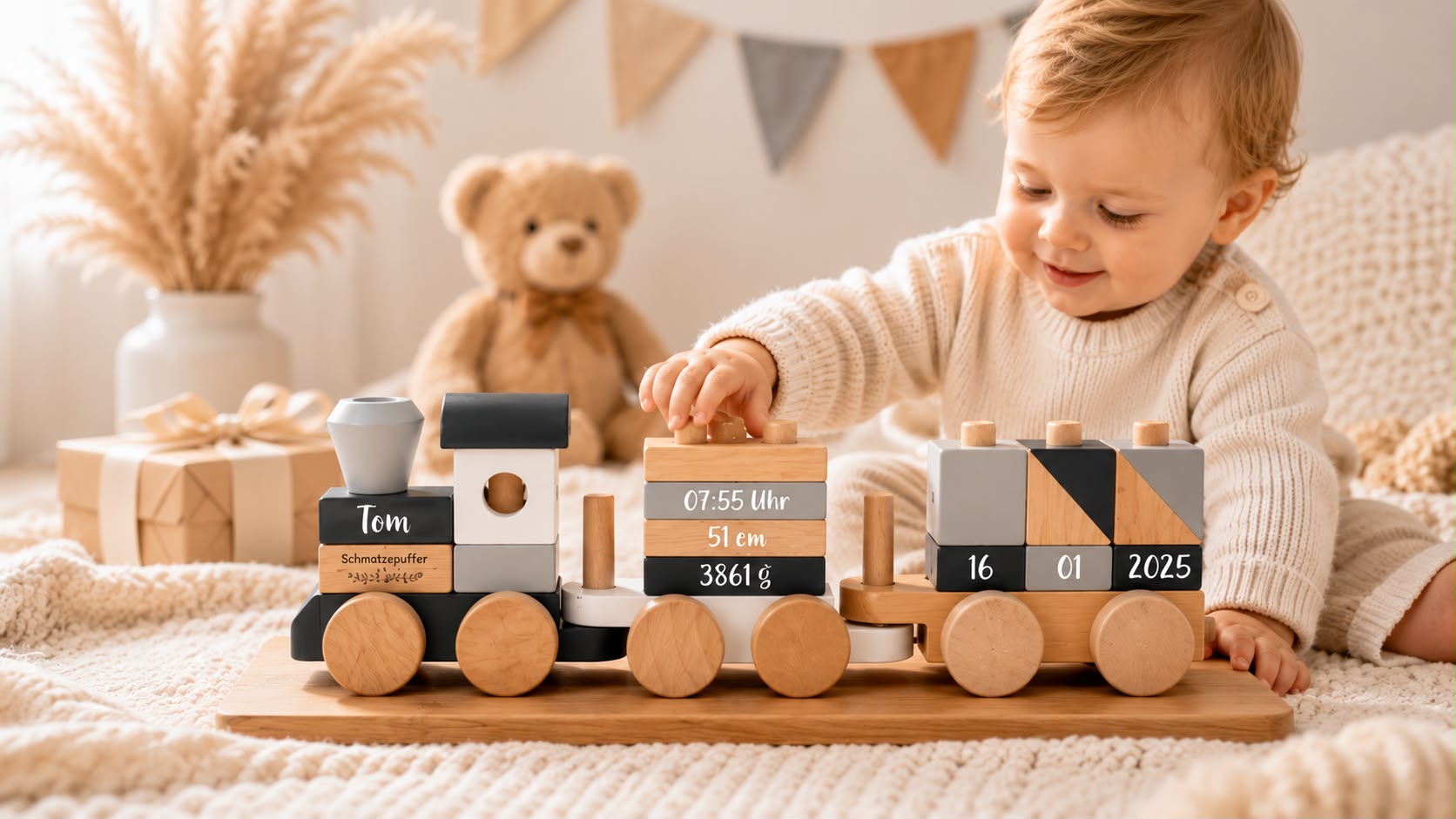
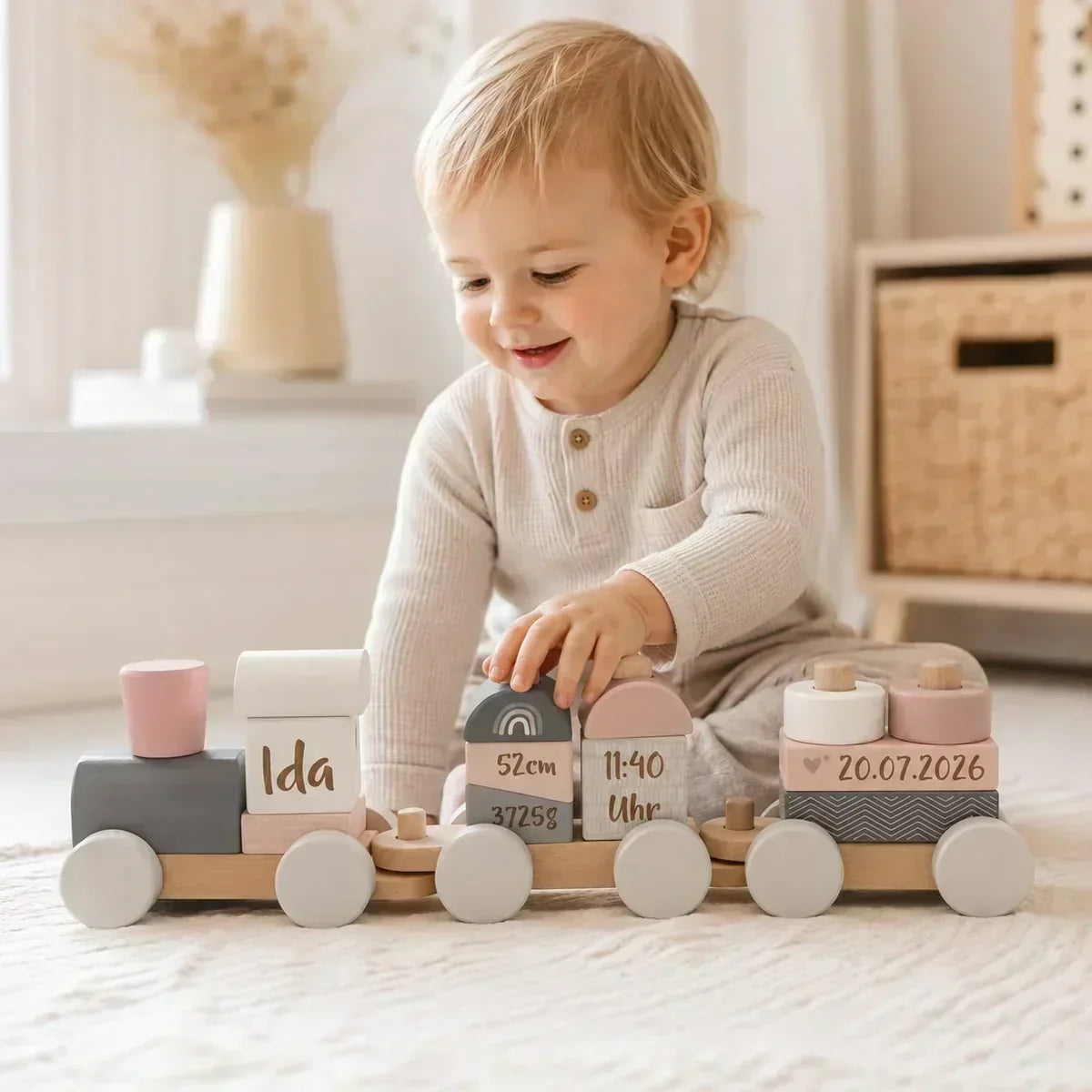
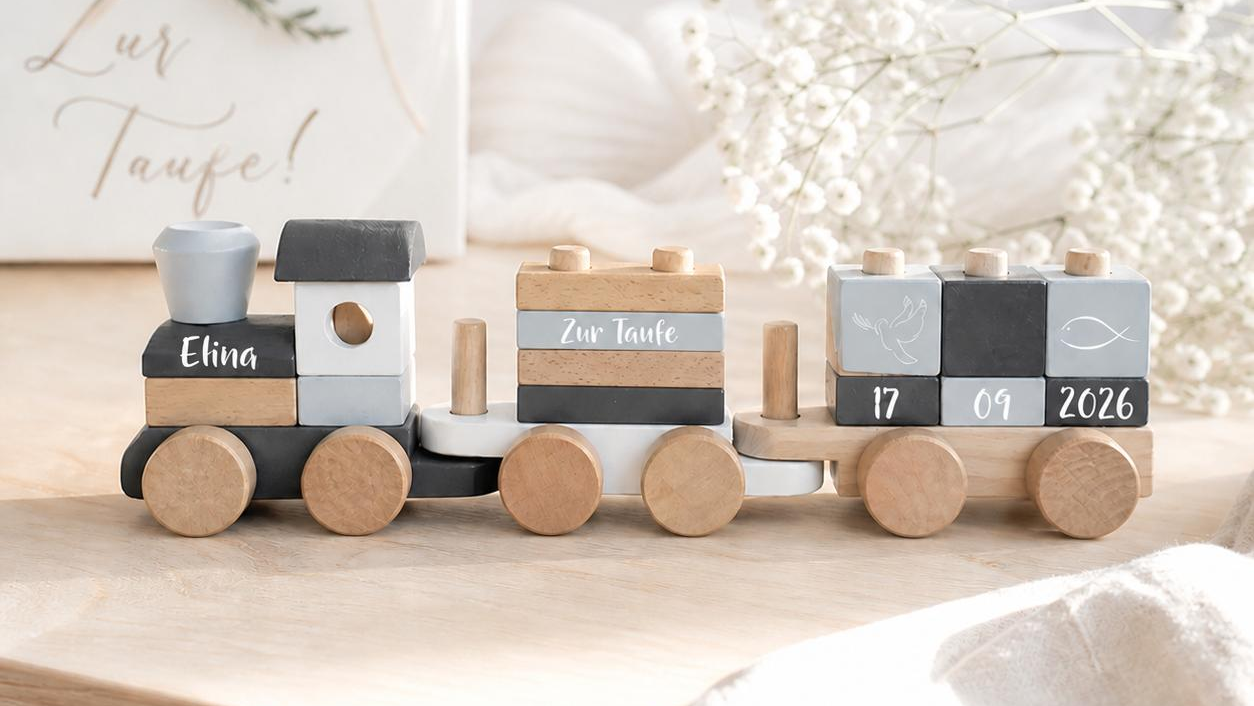
Personalized keepsakes can also hold special meaning and often accompany families for many years.
More important than the price is whether the gift suits the child's developmental stage and interests.
Children usually benefit more from a few well-chosen gifts than from a large quantity.
100. What is truly important in the first baby year?
When parents look back on the first year, many realize that they worried unnecessarily about certain things. Sleep schedules, comparison charts, or individual developmental steps often seem less important in retrospect than they once did.
What babies truly need in their first year of life are reliable caregivers, love, security, nourishment, sleep, and the opportunity to explore their world at their own pace.
Perfect parents don't exist. Children don't need perfection, but people who are present, listen, comfort, guide, and provide security.
The first baby year consists of countless small moments: the first smile, the first sounds, the first tooth, the first steps, and many moments in between. It is precisely these moments that shape the relationship between parents and child far more than any checklist.
The most beautiful gifts for babies in their first year of life
The first year of a baby's life is full of special moments: the first smile, the first sounds, the first teeth, the first time sitting, and finally the first steps. Many families want to capture these memories with a special gift.
Whether for birth, christening, or first birthday – high-quality and personalized gifts often accompany children for many years and frequently become valuable keepsakes for the whole family.
Still looking for a suitable gift idea? Then use our gift finder or discover our most popular categories.
Many parents, grandparents, and godparents are looking for a gift that not only brings joy but also has lasting sentimental value. Personalized gifts with a name, birth date, or individual engraving are particularly popular.
With our gift finder, you can quickly find suitable gift ideas for birth, christening, baby showers, the first birthday, and many other special occasions.
Conclusion: Understanding and Enjoying the First Baby Year
The first baby year is a time full of changes, questions, and major developmental steps. From newborn to toddling toddler, a child undergoes astonishing development within a few months. At the same time, parents also learn something new every day.
Every baby develops at their own pace. Comparisons with other children often lead to unnecessary pressure. Much more important are trust, patience, and loving guidance through everyday life.
When parents perceive their child's needs, provide security, and create space for development, they lay an important foundation for the years to come. It's not perfection that makes good parents, but relationship, closeness, and reliability.
The first twelve months often pass faster than expected. Therefore, it is worthwhile to consciously enjoy the many special moments, in addition to all the questions and challenges.
Find the perfect gift
Find the perfect gift idea in a few seconds
Discover personalized gift ideas for birth, christening, birthdays, and special memories.